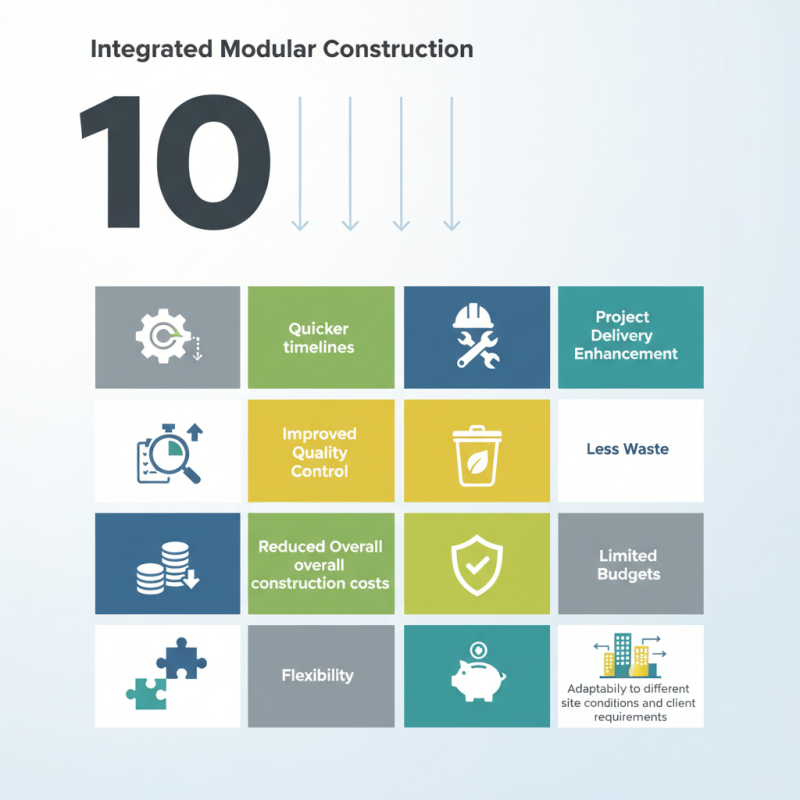
Integrated modular construction has been gaining traction in the building industry. It offers a unique approach that combines efficiency and innovation. Buyers often wonder, what are the benefits of integrated modular construction? This construction method can significantly enhance project delivery. It streamlines various aspects of the building process, resulting in less waste and quicker timelines.
One major advantage is improved quality control. Factories produce modular components under controlled conditions, leading to fewer defects. Additionally, integrated modular construction can reduce overall construction costs. This can be especially beneficial for buyers with limited budgets. However, it’s important to consider that not all projects are suitable for this method. Buyers must evaluate their specific needs carefully.
Flexibility is another key benefit. This approach allows for customization, adapting to different site conditions and client requirements. As cities evolve, the demand for efficient and adaptable construction solutions grows. Integrated modular construction presents an exciting option for modern building projects. Exploring these aspects can help buyers make informed decisions on their construction endeavors.
Integrated Modular Construction (IMC) reshapes the construction landscape. With IMC, modules are prefabricated in a factory setting. This approach allows for greater control over quality and speed. According to a report by McKinsey, the construction industry can increase productivity by up to 50% through modular methods. This efficiency translates into shorter project timelines and reduced labor costs.
In addition to speed, IMC enhances sustainability. A study from the Massachusetts Institute of Technology highlights how modular construction can reduce waste by up to 90%. Prefabrication minimizes on-site disruption, benefiting both the environment and surrounding communities. However, challenges exist, such as the need for skilled labor and potential design restrictions. Buyers must evaluate whether these limitations align with their project goals.
Collaboration is crucial in IMC. A successful modular project requires seamless communication between architects, engineers, and contractors. Failure to coordinate effectively can lead to delays and increased costs. Hence, buyers should seek reliable partners with expertise in IMC. Understanding the nuances of this construction method is essential for successful implementation and achieving the desired outcomes.
| Benefit | Description | Impact |
|---|---|---|
| Faster Construction | Modules are built in a factory setting, reducing on-site construction time. | Projects can be completed significantly faster. |
| Cost Efficiency | Streamlined processes reduce labor and material costs. | Lower overall project costs. |
| Quality Control | Modules are built in a controlled environment, ensuring consistent quality. | Improvements in overall build quality. |
| Sustainability | Reduced waste and efficient use of resources during construction. | Less environmental impact. |
| Flexibility | Designs can be easily modified or expanded in the future. | Adaptable for changing needs. |
| Enhances Safety | Reduced on-site construction risks lead to a safer work environment. | Lower accident rates. |
| Increased Collaboration | Encourages teamwork among different trades early in the project. | Improved project outcomes. |
| Reduced Site Disruption | Less construction activity on-site leads to less disruption for neighbors. | Better community relations. |
| Streamlined Permitting | Modular projects often have simplified approval processes. | Shorter timeframes for project initiation. |
| Consistency | Uniformity in module construction leads to predictable outcomes. | Reliable performance and aesthetics. |
: IMC involves prefabricating building modules in a factory for better quality and efficiency.
IMC can reduce construction costs by up to 20% due to shorter timelines and lower labor expenses.
IMC can decrease waste by up to 90%, benefiting both the environment and surrounding communities.
Challenges include the need for skilled labor and potential design restrictions that may not fit all projects.
Seamless collaboration among architects, engineers, and contractors prevents delays and additional costs.
Most construction occurs in a factory setting, minimizing delays and ensuring consistent quality through strict guidelines.
Buyers need precise upfront designs because changes post-manufacturing can lead to increased costs.
Engaging with industry experts early on can help identify potential design challenges and mitigate costs.
Regular inspections during production ensure high-quality standards but require buyer involvement for site-specific factors.
Yes, maintaining open communication helps align expectations and fosters ongoing improvements throughout the project.
Integrated Modular Construction (IMC) offers numerous advantages for buyers looking to optimize their building projects. One of the key benefits of integrated modular construction is enhanced cost efficiency, as this method reduces waste and minimizes labor costs through streamlined processes. Additionally, buyers can significantly benefit from accelerated project timelines, as modular components are constructed off-site and assembled quickly on-site, leading to faster completion dates.
Quality control is another critical aspect of IMC, with rigorous standards and factory conditions ensuring higher quality outcomes compared to traditional methods. Moreover, sustainability plays a vital role in modern construction practices; modular solutions often incorporate eco-friendly materials and techniques that reduce environmental impact. In summary, when considering what are the benefits of integrated modular construction, buyers will find advantages in cost savings, efficiency, quality, and sustainability, making it a compelling option for future projects.

 Shupshy Container